Wednesday, May 1, 2013

Private Capture of Federal Public Lands: A Brief Overview


By Jim Bailey, Wildlife Biologist


Our federal lands are an important public trust resource. They are owned by the public and managed by trustees (government agencies) to benefit current and future generations. Some refer to the public lands as “commons”. They note a tragic history of such lands. Without regulations, competing individuals have trashed the commons as each tried to obtain more than their share of benefits. Today, this threat to federal public trust lands is supposed to be controlled with prudent management by our trustee agencies, mostly the Forest Service, Park Service, Bureau of Land Management and Fish & Wildlife Service. 


About 30 percent of Montana is federal public land. These lands are essential to the quality of life in our “Big Sky Country”. They are the scenery, the backdrop to our lives. They are vital components of the habitat for fish and wildlife that we treasure. They are places for all sorts of outdoor recreation. They are essential to tourism, our state’s largest industry. Public benefits from Montana’s federal lands are large and diverse. They must be protected for use and enjoyment by the people.


But, the tragedy of the commons is still with us. There are individuals and industries hell-bent on turning our federal lands into private profits. Their strategy is capture and control. Capture special or exclusive access to the land. Control the trustees, our government agencies and legislatures, to bend management policies in ways that favor special interests on our lands.


Capturing the public resource


Industries and other special interests have used laws, government policies and historical precedent to capture permanent, often exclusive, access to our federal public lands. 


The 1872 mining law is one example. Mining interests extract $2-3 billion annually from the public trust, mostly at the minimal cost of $2.50 to $5.00/acre. The 1872 mining law is a blatant case of private capture of the public trust. Results can be locally devastating. Yet, the amount of land involved is small by comparison with other private uses of the public land.


The most widespread capture of public land is the federal livestock grazing program. Over 14,000 square miles, about 10 percent of Montana, is federal land grazed by private livestock. Most of this land is managed by the BLM and Forest Service, but National Monuments and Wildlife Refuges are included. Grazing fees are low and have not kept pace with inflation. In some programs, half the funds from grazing fees must be reused to further enhance the private grazing. But, taxpayers pay most of the costs from the federal grazing program. 


Many public-land livestock operators believe they have a permanent “right” to their allotments. Banks often recognize this idea by considering the value from using the public land as private loan collateral. While legal standards proclaim that a public grazing allotment is a “privilege”, not a right, our land-management agencies rarely revoke the permanent connection of an allotment to a landowner’s private land. Moreover, new laws, such as wilderness designations, and court decisions often provide exceptions for livestock operators to use the public lands in contrast to the rights of all others. Each such new law or court decision strengthens the legal argument that the public’s right to determine how the public land will be used has been diminished.


Other federal lands are dedicated for coal and petroleum production. Impacts of these industries are large and growing in some parts of Montana. Wildlife populations have been decimated and rivers degraded. Historically, reclamation following these projects has often been lacking. Industry lobbyists in Congress and in the state legislature always oppose industry restrictions or regulations. Industry propagandists tell us that their impacts upon our landscape are minor while their contributions to the public welfare are large. Usually, as we look farther, in both space and time, from each industrial project on the public land, the costs increase and the benefits decrease for a larger number of the owners of the public land.


Ultimate control of federal land can be contrived by arranging for private access to land where public access has been eliminated. Small units of the federal land trust are isolated by private land and inaccessible without permission. The Forest Service and BLM have little say in managing many of these parcels. 


Many larger units of federal land have only a few public roads for access across adjacent private land. Private interests often seek to close these public roads. Limiting public access may provide an adjacent landowner with special benefits - without the tax assessments - from our public land. Such combinations of private and otherwise inaccessible public land can be a valuable commodity when sold to a hunting outfitter who will treat the public land as a private hunting reserve.


Controlling the public trustee


Private interests control our government trustees of the public lands in very many, sometimes obscure, ways. The most obvious approach is to fund the elections of friendly legislators and governors. However, the tactics of the resulting trustees of our public lands are often far from obvious. Uses of the public lands are skewed toward private benefits and away from long-term public values in very many ways. I can only refer to a few examples.


The ultimate government policy statement is a budget. Special interests contrive for Congress to fund the leasing of public lands while restricting funds for monitoring or regulating these uses. For many federal grazing allotments, there has not been a review of the allotment management plan in over a decade. Some have never had environmental costs and benefits analyzed under the National Environmental Protection Act. Congress has said that federal agencies may not diminish grazing allotments on public lands just because monitoring and review have not been completed. Then Congress fails to adequately fund the agencies for monitoring and review. Impacts to wildlife habitats are, at best, unknown or, at worst, serious.


Special interests routinely seek to weaken the Endangered Species Act. Since its inception, it has been our nation’s most powerful tool for preserving species and their habitats. The Act is the only institution providing consistency of restoration effort across state boundaries and across changes in state and federal government administrations.


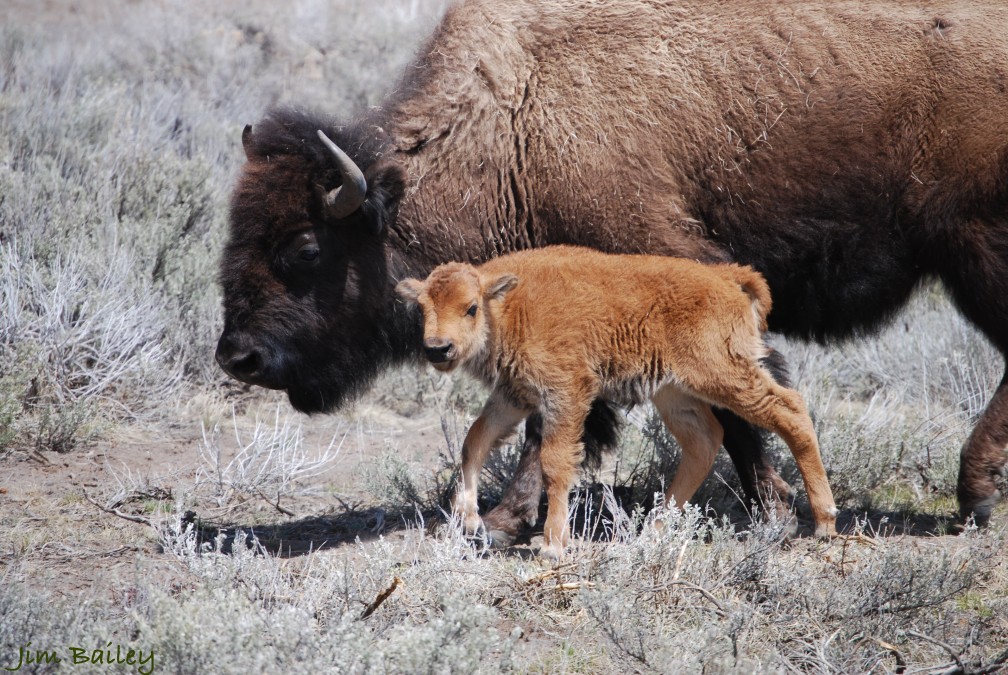
I recently visited National Grasslands in other states. They are managed by the Forest Service. According to the National Forest Management Act, the Forest Service is to provide suitable habitat for native species, well distributed across its lands. I asked why the Grassland had no bison. One district ranger replied: “We can’t have bison because we are a multiple-use agency.” Another ranger said I should discuss bison with the local grazing association whose cattle use the Grassland. I wondered what “multiple use” meant to the Forest Service, and why private grazing associations had replaced the trustees of our public trust land.


Even state laws and policies contrive to limit wildlife possibilities in favor of private uses on our federal lands. Montana law requires that wildlife transplants are prohibited unless the commission determines there is no threat of harm to agricultural production. First, this is an impossible standard. Second, since livestock grazing on federal lands is “agricultural production”, it prohibits the public from deciding that a wildlife herd can be more publicly beneficial than a private grazing allotment on any federal land. As a consequence, FWP policy is that “any localized removal, transfer, or conversion of established domestic sheep allotments on public lands for the benefit of bighorns” should only occur if agreed to by the sheepherder. In the cases of bighorn sheep and bison, the Beaverhead National Forest and the C. M. Russell National Wildlife Refuge, respectively, use this law as an excuse for not having adequate bighorn herds on the Forest or any bison on the Refuge. Thus, private interests capture uses on our federal lands by controlling the trustees of our public wildlife and our federal lands.


Conclusion


These are but a few examples of private capture of our federal lands and control of our public trustees. Such activity is abundant, widespread and relentless. Each special-interest project seems small or perhaps moderate in scope. Consequently, public awareness of the threat is limited but the cumulative results are enormous and increasing. Meanwhile, public options for using our lands are being constrained or eliminated, diminishing our legacy to future generations of Montanans.


Monday, April 15, 2013

Montana's Senator John Brenden's "Heathen Into Christian" Bison.

Recently,  Sen. John Brenden, on April 11th, 2013, during the SB 143 hearing before the House Agriculture Committee, compared wild bison in Montana, to heathens, and domesticated bison to Christians, "They are maintaining that bison from Yellowstone National Park are wildlife. There's been bills and discussions put in, that once they are in captivity, they become domesticated, or they're livestock. If I knew the exact transition, the moment that you go from being a heathen into a Christian, I don't know that answer. It's a very difficult one."


Get Adobe Flash player

This statement has larger ramifications than just the speciesism against wild bison in Montana; this is racism, against the Native American tribes, whose culture is intertwined with the bison. Brenden did not make an association of value between wild and domesticated bison, but made a moral association, which does not apply to animals, but to people.

The Native Americans across the U.S., as well as indigenous peoples across the world, have often been subjected to forced conversions to Christianity, or another dominant religion, in the guise of "civilizing" or "domesticating" them. This arrogant perspective that one belief system is superior and needs to be imposed on another is deplorable. The very term "heathen", from Old English hæðen, means "not Christian or Jewish". Perhaps this was a "Freudian Slip", revealing his views of Native Americans being herded onto reservations to be "domesticated" and often converted to Christianity, as being superior to those Native Americans that desire to uphold an older spiritual culture that views bison as kin.

In Lame Deer, Seeker of Visions, by Richard Erdoes and John Fire Lame Deer, Lame Deer states, "It is the same with the buffalo. They have the power and the wisdom. We Sioux have a close relationship with the buffalo. He is our brother. We have many legends of buffalo changing themselves into men. And the Indians are built like the buffalo, too-big shoulders, narrow hips. According to our belief, the Buffalo Woman who brought us the peace pipe, which is at the center of our religion, was a beautiful maiden, and after she taught our tribes how to worship with the pipe, she changed herself into a white buffalo calf. So the buffalo is very sacred to us. You cant understand about nature, about the feelings we have toward it, unless you understand how close we are to the buffalo. That animal was almost like a part of ourselves, part of our souls.

The buffalo gave us everything we needed. Without it we were nothing. Our tipis were made of his skin. His hide was our bed, our blanket, our winter coat. It was our drum, throbbing through the night, alive, holy. Out of his skin we made our water bags. His flesh strengthened us, became flesh of our flesh. Not the smallest part of it was wasted. His stomach, a red-hot stone dropped into it, became our soup kettle. His horns were our spoons, the bones our knives, our women's awls and needles. Out of his sinews we made our bowstrings and thread. His ribs were fashioned into sleds for our children, his hoofs became rattles. His mighty skull, with the pipe leaning against it, was our sacred altar. The name of the greatest of all Sioux was Tatanka Iyotake--Sitting Bull. When you killed off the buffalo you also killed the Indian--the real, natural, 'wild' Indian." 

Now, that is not Christianity. That is what Sen. John Brenden would say was "heathen" - juxtaposed to Christianity. And this interconnectedness is not isolated to just the Lakota nation. While not having researched the other Montanan nations yet, I have heard a number of other Nations speak of the Bison, as related and sacred. An example of this was evident at the Montana Bison Rally, at the Helena Capitol, on March 12th, 2013. This video clip was made by the Buffalo Field Campaign. As soon as I can edit the full version of Sen. Sharon Stewart-Peregoy's speech, I will put it up. She spoke very clearly on the importance of the bison to the Native American nations in Montana.


This comment of Brenden's needs to be challenged and publicly called into question. He needs to be held accountable. Racism and lack of tolerance for other's spiritual practices has no place in a "civilized" society, certainly not in our legislature. 


Kathryn QannaYahu


Tuesday, April 9, 2013

The Raid on Our Wildlife Management Areas


Our Montana Wildlife Management Areas are a public trust resource. Purchased with hunters’ dollars, they are owned by the people. Present and future generations of Montanans are the legal beneficiaries of the trust. Fish, Wildlife & Parks is the “trustee”, obligated to manage these trust lands to benefit the public owners.

However, special interests are always ready to turn the benefits of a public trust resource into private gains, even at the expense of public needs and values. They seek to (1) obtain privileged access to our public trust lands, and (2) control the trustee. They will use the legislature and the law to accomplish their private goals. Public diligence is needed to assure proper management of trust resources for public benefits. And so it is with our state WMAs and FWP. 


Livestock on our WMAs

Private domestic livestock graze wildlife forage and cover, and displace wildlife, on at least 21 WMAs. In some cases, entire WMAs are in livestock grazing programs.

Limited livestock grazing can be a useful tool for managing vegetation to benefit some types of wildlife. But levels and frequency of livestock use on our WMAs almost always exceed beneficial levels. Most WMA pastures are grazed 2 years out of every 3. FWP has not been able to provide clear evidence that wildlife populations, especially big game, have responded positively to the effects of livestock grazing on WMAs. In fact, most data indicate negative effects. Effects on streamside vegetation and fisheries are often ignored. Abundant scientific literature documents negative impacts of cattle grazing to wildlife. 


Usually, FWP is paid for public forage used by private livestock, mostly at less than private-land rates. FWP expenses for managing private grazing have included costs for fencing and water developments, and costs for fencing cattle out of wetlands and other habitats prone to severe use. Personnel costs for monitoring grazing projects and for preparing and administering contracts and environmental assessments are never reported, and must be large.

FWP touts “good landowner relations” as a benefit from private grazing on our WMAs. No doubt, there is some truth to this claim. But neighborliness does not usually require one neighbor’s access to the other neighbor’s property.

Many private grazing cooperators allow hunting on adjacent private lands, but this is seldom required in contracts to graze public lands. Some cooperators are already paid for hunter access through the Block Management program.

If the private use of WMA forage is considered a trade, compensating for big-game use of forage on private lands, this goal should be clearly stated and analyzed in each environmental assessment for each WMA grazing contract. It is likely that the amount and value of WMA forage used by livestock exceeds the value of forage used seasonally by big game on adjacent private land.

On 21 of our WMAs, each private grazing project is unique with its own set of public benefits and costs. However, the overall program is immense, as are costs for managing the program. In reviewing numerous environmental assessments for many grazing projects, it is clear that private benefits greatly exceed net public benefits. 


Livestock Trailing across WMAs

The most narrowly focused special-interest use of a WMA is supported by law. This law provides special privileges to one domestic sheep operation on one WMA. However, it could be used by other livestock operators on other WMAs. The law requires permitting of livestock trailing across any WMA under almost any circumstances. Unlike all other commercial uses of WMAs, FWP may not require a fee for livestock trailing, or for forage used in the operation. (Currently, over 16,000 domestic sheep are trailed in up to 6 bands, twice yearly across Robb/Ledford WMA, taking at least 2 days for each passage. The forage removed is not trivial.) The law allows trailing for up to 4 days across a WMA! FWP may not analyze the impacts of such trailing as the law exempts trailing across a WMA from analysis under the Montana Environmental Protection Act. In the public interest, this law should be repealed.

Required Logging Access

Recent Montana law threatens to make wildlife habitat a secondary goal on forested WMAs, with timber management a priority. It (1) requires FWP to have a forest management plan and timber sale program funded with FWP monies, (2) requires an annual timber sale, and (3) requires FWP funds be used to remeasure the annual sustainable yield of timber from FWP forested lands at least once each 5 years. In requiring that FWP’s forest management plan be based upon the annual sustainable yield, and in emphasizing the measurement of annual sustainable yield, the law will make it politically difficult for FWP to permit anything less than this amount of timber to be removed from forested WMAs each year. FWP receipts from sale of timber may only be used to plan additional timber harvests on WMAs. For timber companies, it’s about like owning the land, while FWP pays the property taxes. Another law needing repeal. 

Haying and Sharecropping

Other WMAs have contracts for removal of hay and for sharecropping to produce a variety of agricultural crops. Wildlife responses to these activities are seldom, if ever, measured adequately. Public benefits are assumed but unclear. Total public costs are unreported. Some WMAs have both private grazing and sharecropping or haying projects.

With sharecropping, a portion of the agricultural crop is left unharvested for wildlife, often pheasants, to use. If the unharvested portion is 20% of the area, the wildlife value of the agricultural crop would have to be 5 times as great, on a per-acre basis, as the year-round value of land not placed in the sharecropping program and growing native vegetation – just to break even! 

Private Capture and Control

The strategy of “capture the public trust resource and control the trustee” is a major threat to Montana wildlife and Montana wildlife lands. The constant but incremental loss from the public trust has gone largely unnoticed for too long. There is an urgent need to hold our legislature, and FWP, accountable for this loss. A widespread critical focus on WMA management is one place to start. 


FWP WMAs with private livestock grazing
 
WMA
ACRES1
Kootenai/Woods Ranch
1,417
Mt. Silcox
1,552
Kuhns
1,530
Blackfoot-Clearwater
43,761
Threemile
93
Fleecer
7,067
Wall Creek
7,067
Mt. Haggin
58,188
Robb/Ledford
28,097
Beartooth
31,947
Beckman
6,568
Blackleaf
10,397
Ear Mtn.
3,047
Judith
9,408
Haymaker
1,321
Fresno Reservoir
2,677
Vandalia
310
Isaac Homestead
1,169
Smith River
3,312
Elk Island
948
Seven Sisters
560
1Area of WMA, may exceed acres that are grazed.

Jim Bailey
Retired Wildlife Biologist


Saturday, March 23, 2013

Montana Wild Bison Advocate Donates Private Collection of Kevin Red Star (Crow Nation) Artwork For the Cause


Montana has been experiencing such a war against our wildlife, especially in the Montana state legislation. For those of us in the trenches reviewing, voting and testifying against bills (especially those making the long drive to Helena frequently);  making sure that others are aware of what is taking place through media, blogs, letters to the editor; attending meetings with officials and organizations; trying to protect our WMA's for wildlife; etc.,  the last 4 months have seriously been a war. We cheer each time a bad bill is tabled and soldier on when one is not. So when a victory occurs,  like the January 2013 Park County Decision, allowing an increased territory for wild bison to leave the Yellowstone National Park into Montana, not being shot the second they step out,  it breaths new life into our efforts.

The Gallatin Wildlife Association caught the attention of a wild bison advocate, who had an idea. The anonymous advocate had seen the wildlife Gallery at the GWA website, which contained a number of beautiful photos of wild bison. GWA was then contacted with a proposal - the donation of a private collection of artwork by Crow Nation artist, Kevin Red Star. The sale of which is earmarked strictly for Montana wild bison restoration!


The Gallatin Wildife Association has long been a major advocate for the restoration of wild bison in the state of Montana, promoting the "controversial" idea that as a native wild species, bison deserve some native range in Montana. Bison are the only wildlife that are not free to leave the Yellowstone National Park. When they do, they are either hazed back in, shot or captured for slaughter. Some bison have the misfortune of being captured for the USDA APHIS Gonacon sterility experiments.  With the big questions being, "Why does anyone want to sterilize our wildlife? For what purpose?" The false reasoning has been that of brucellosis. But the Montana Department of Livestock and APHIS know that there has not been a single documented case of brucellosis being transferred from wild bison to cattle. They have also known for years, since genetics has lent a hand, that the brucellosis transferred to domesticated cattle from wildlife has been from the elk, not bison. Yet they still push for the slaughter of bison coming into their native, historical range - Montana.

The GWA is involved in educating the public on the real issues concerning wild bison restoration in Montana; researching and proposing various locations for restoration; working with a variety of conservation organizations in Montana, fighting the anti-bison legislation, promoting the real science of wild bison and clearing up the misconceptions concerning brucellosis; and promoting the longterm objectives of a healthy genetic stock that could reach sustainable numbers to be included in hunting. It is these continued efforts that the private collection of  Kevin Red Star Artwork will help fund.

Glenn Hockett, the president of the all volunteer non-profit organization, Gallatin Wildlife Association (established in 1976), stated, "I was honored to receive this donation on behalf of the Gallatin Wildlife Association.  We are a completely volunteer organization and once the art work sells, this will help us with our efforts to restore and conserve wild native bison both in the Greater Yellowstone Area as well as to other appropriate landscapes in Montana."


As Glenn is fond of saying - "Let ‘em roam!"


Kathryn QannaYahu


Saturday, February 23, 2013

The Transparency of the Montana 2013 Legislative Bison Crosshairs


For over a month I have closely watched the 2013 Montana Legislative Session. It is difficult to describe the overwhelming attack on Montana's wildlife and the public's access. There is a very concerted effort to erode the public's rights, putting them in the hands of a privileged elite. For example, HB 404, sponsored by Rep. Kelly Flynn (rancher and outfitter in Townsend, MT) - Provide funding for block management program. This bill seeks to fund Montana's Block Management Program, a program where the State leases land from private landowners, so that public hunters can hunt on that land. The catch is, the funding will come out of Habitat Montana, a program where the State purchases land for public access. Habitat Montana benefits the Montana public, while Block Management ultimately benefits the private landowner. While Block Management can be beneficial to the public hunter, it should not be at the cost of the better benefit - that of purchasing land, making it available to all the public of Montana for many purposes.

HB 404 is the epitome of what is taking place in the Montana 2013 Legislative Session - the removal of what is public, for the benefit of a minority (5%) elite agriculture/ranching industry. And no other wildlife is in this legislative crosshairs like the Wild Bison.


There are 10 House and Senate bills (short titles) that target the Bison.

SB 143 - Revise bison management, sponsored by Sen. John Brenden (Republican, owner of Brenden Farms in Scobey). Senate Fish & Game Committee. This bill would allow year round hunting on any bison that stepped out of the YNP, would prohibit the transfer, relocation and transplantation of any wild bison - equates them with diseased vermin.

SB 256 - Making FWP liable for private property damages caused by wild buffalo/bison, sponsored by Sen. Frederick (Eric) Moore (Republican, rancher, co-owner Solaris Feeders Llc. - cattle feed, Miles City). Senate Fish & Game Committee. This bill would make the FWP liable for any private property damages from bison, contrary to the status of all other Montana wildlife, provided by the Montana Supreme Court ruling of C. R. Rathbone.

SB 305 - Generally revise laws governing bison management in Montana, sponsored by Sen. Jim Peterson (Republican, owner Jim Peterson Ranch). Senate Fish & Game. This bill would prevent bison, such as the American Prairie Reserve pure bison, being released with a transplanted wild herd (such as at the CMR) to increase the genetic stock.

SB 341 - Establish criteria for transplantation or augmentation of wildlife, sponsored by Sen. Jennifer Olsen Fielder (Republican,Silverline Projects Inc., "Wildlife Damage Control", husband Paul Fielder Montana Trappers Association).Senate Fish & Game Committee. This bill seriously prohibits any release, transplanting, etc.of bison by means of public rejection, "implemented only after it is determined that transplantation or augmentation of a wildlife species will not jeopardize existing grazing allotments" on public land, is possibly a traffic hazard, require approval of county commissioners, require nearby private landowners permission, ad nauseam.

HB 249 - Revising laws related to presence of bison/buffalo on private property, sponsored by Rep. Alan Doane (Republican, rancher in Bloomfield/Glendive). House Appropriations Committee. This bill gives private property owners the right to kill wild bison as they see fit.

HB 328 - Allowing hunter notification of wild buffalo/bison location, sponsored by Rep. Ted Washburn (Republican, Big Game Hunting). House Fish, Wildlife and Parks Committee. This bill gives the Dept. of Livestock the authority to determine if a wild bison can be killed with a hunt,notification of license recipients as to when and where they may hunt, including the location of the wild bison. (Thats not a hunt when you demand exactly where the bison is.)

HB 396 - Revise laws regarding translocation of wild buffalo/bison, sponsored by Rep. Mike Lang (Republican, owner Northern Ag Service Malta). House Agriculture Committee. This bill grants authority to local County Commissioners to veto the release, relocation and transplantation of any brucellosis free bison.

HB 484 - Generally revise bison laws, sponsored by Rep. Alan Redfield (Republican., rancher - Davis Creek Ranch Livingston). House Agriculture Committee. This bill is very insidious, seeking slaughter of any wild bison exiting the YNP, capturing for experimenting, vaccinating, treating all wild bison as diseased vermin, gives the Dept. of Livestock the primary authority over wild bison, ...

HB 507 - Generally revising management of wild buffalo and wild bison, sponsored by Rep. Bill Harris (Republican, Rancher, Outfitter - Harris Ranch, Fort Musselshell Outfitters). House Agriculture Committee.This bill applies livestock laws to wild bison, restricts release and transplanting, holds the Dept. of Livestock as the authority over wild bison, may not transplant any wild bison outside of nearby area of YNP. Any animal leaving the YNP are the property of the Dept. of Livestock to do as they see fit.

HB 312 - Revise laws relating to brucellosis surveillance, sponsored by Rep. Alan Redfield (Republican, rancher - Davis Creek Ranch Livingston). House Agriculture Committee. This bill is a test and slaughter bill, not only of elk, but also bison, charging FWP for the financial bill.

Each of these bills contains more detrimental language than the very short descriptions I have provided. If you will notice, there is a political party common denominator in all these anti-bison bills - Republican. Why are these republicans so adamantly set on destroying the wild bison and prohibiting them from being released elsewhere in Montana? Well, if you read the language, you see 2 common thoughts expressed - grazing competition and disease (brucellosis). 


Supposed Brucellosis Threat

So lets tackle the brucellosis issue for a moment. There has not been one documented case of a bison transmitting brucellosis to any livestock. And since science has advanced to the point that they can genotype the Brucella abortus found in the recent cattle outbreaks, they have all shown to be from elk, not bison. The Department of Livestock knows this and even posts it to their news release section of their website for the last 5 years. In fact, in the last 5 years there have been 9 cases from about 5 or 6 herds. In 2008, Paradise Valley (1 cow). In 2010,  Gallatin (1 domestic bison cow) county, on Turner's Flying D Ranch (speaking with Eric Liska of MTDOL, he stated that there were other bison, but no specific numbers could be provided, that were not cultured, but simply tested seropositive, meaning they had antibodies, showing they had been exposed but were not cultured to see if they were infective. I asked for a location on their website confirming the data and none could be provided.) In 2011, 2 cattle herds had positives in Park (6 on one ranch - confirmed at the Brucellosis in Yellowstone Bison, Science Review and Workshop, presenter Dr. Marty Zaluski), and Madison (1 bull) counties. According to MTDOL, the genotype indicates the brucellosis came from elk.  MTDOL Livestock News Releases  9 cases of brucellosis to warrant the massive killings of 2009 YNP bison for  these last 5 years.

Not all bison are exposed to brucellosis, first brought to wildlife by the livestock industry. Of those exposed, not all are infectious. Brucella abortus can only be transmitted through contact with an aborted fetus (generally the first calf) and those birthing fluids for a very short period of time (heat and sunlight, as well as animal scavenging seriously diminish the possible exposure time). Bison bulls, calves, yearlings and non-pregnant females do not shed infected materials that can possibly spread brucellosis. Possibly infected females, in their first pregnancy, are the only possible risk. But as stated before, there has not been a documented case of brucellosis transmission from bison to cattle. 
 

Interview with Dr. Marty Zaluski - Montana State Veterinarian, Dept. of Livestock

In a recent interview (Feb. 12th, 2013), I asked Marty a number of specific questions about bison and brucellosis. 

Q: From a health perspective, were you comfortable with the movement of bison from quarantine to Fort Peck? 

A: Yes, he had no reservation about their health status, but believes it would be good to follow up, to make sure they remain free of brucellosis.

Q: Did you approve moving the bison herd from Elk Island Park in Alberta, Canada to the American Prairie Reserve in Montana? Are you comfortable with their health status? Could these bison be used for restoration of a wild bison herd here in Montana? 

A: Yes, Marty approved the health status of the APR bison and was comfortable with their being brucellosis free. And yes, they could be used for restoration. His, "focus is quite narrow for disease issue."  

Q: Could the wild bison on Turner's Green Ranch be used for restoration? 

A: Yes, they are the most tested herd and have been proven to be free of brucellosis. The risk is infinitesimally small.

Q: What's your assessment of disease transmission from bison to cattle - under the current program? 

A: Not zero, its low. You cant prove a negative. The current management is a result of tradition. 


Questions to the radical anti-wildlife ag/livestock industry.

Why, when the Montana State Veterinarian has had no reservations about the health of the transplanted herds, and sees an infinitesimally small risk of transmission of brucellosis from bison to cattle, do so many of the radical ag/livestock industry treat wild bison as diseased vermin and legislativally demand their slaughter? Especially since they know the known cases come from elk? Because this is not about brucellosis, this is about grazing and the nearly free grazing rights on public lands that they want access to and the wild bison not to have access to. 

As to SB 212, the oft quoted anti-bison bill that became law in 2011, that required the FWP management of wild bison that are released or transplanted in Montana, it does not apply to the wild bison that are entering Montana on their own, which is part of the recent spat of legislative bullsh$it erupting right now. 212 makes the state liable for the costs for this bison management, which does not apply to any other wildlife in Montana. This needs to change. Wild Bison are wildlife, not livestock and need to be treated as such. Which brings me to the Bison Brucellosis Workshop.


Bison Brucellosis Workshop Agenda Feb. 26-28, 2013

A Bison Brucellosis Workshop is being held at the Chico Hot Springs Resort in Pray, MT, on February 26-28, 2013. On the first day, from 2:30 - 3:00 Disease Suppression: Immunocontraceptives will be presented. This is the frickin' experimental drug GonaCon. The Department of Agriculture APHIS (Animal and Plant Health Inspection Service) has developed a "vaccine" on captured bison that migrated out of YNP. When the GnRH vaccine is injected into the animal's body, the body's immune response neutralizes the hormone's function, resulting in infertility in both males and females. 

This is our wildlife they want to make infertile. And what about the effect on anyone eating bison meat that has been "innocultated" with this GonaCon"vaccine". We know that livestock treated with growth hormones, antibiotics and such, pass into the meat and milk and affect the humans that eat it. Will this also transfer to those that hunt the bison and eat the meat? Or those that simply eat the bison meat? Will this make humans infertile as well? They have used this on deer as well. This should not even be on the table at this workshop. Our wildlife is wild and should not be treated with infertility drugs.

Just after this debacle of an idea, from 3:00-3:30 is Disease Suppression: Vaccination. This is the plain old garden variety bad idea brucellosis vaccinating our wildlife bullsh$it. What hunter wants to eat vaccinated wildlife? What economic success is there going to be in trying to inoculate a free roaming population of wildlife? In fact, when I spoke with Dr. Marty Zaluski about HB 312 and seroprevalence reduction in wildlife through vaccination, he answered, "Vaccinating elk is not viable, vaccinating bison poses challenges, there is no hope at all in vaccinating elk." 

Dr. Bruce L. Smith stated in his letter to the HB 312 committe, "Tools for reducing prevalence of brucellosis, and for that matter other diseases in free-ranging wildlife, are limited compared to those for remedying the disease among infected herds of cattle: tools such as prophylactic vaccinations, culling, test and slaughter, or whole herd depopulation. My experience in Wyoming shows that available vaccines (S19 and RB51) are so marginally efficacious in protecting elk against field strain brucellosis infection and preventing brucellosis-induced abortions that they are not a viable management tool. Wyoming’s experimental test and slaughter program—implemented to greatly reduce or eliminate brucellosis in feedground elk—was abandoned after 5 years due to its tremendous budgetary costs and failure to achieve the program’s goal. The most cost-effective means of limiting exposure and infection of susceptible cattle herds to brucellosis from potentially infected bison or elk are to calfhood vaccinate cattle herds and proactively implement practices that limit species sympatry and comingling during periods when transmission is most likely to occur." 


We need to get the radical ag/livestock industry out of legislating our wildlife as livestock. Wild bison are wildlife and have a right to be here in Montana as wildlife, just as all the other wildlife populations. The Montana public has a right to that wildlife. 5% of the ag/livestock industry should not hold over 50% of the legislative seats to push their special interest agendas on us.

Please take a few moments and contact these legislators and get these anti bison bills killed. 

http://leg.mt.gov/css/Sessions/63rd/legwebmessage.asp  

Call: 406-444-4800


 Kathryn QannaYahu


Sunday, February 10, 2013

Dr. Bruce L. Smith's Letter to Montana H.B. 312 Hearing


It is unfortunate that the majority of the public does not know the details involved in much of the testimony given at a legislative hearing. It would go along way in educating the public in many matters. For example, often a person testifying, especially concerning a controversial bill, is limited by time to make specific points or provide verbal documentation. Sometimes all they get to do is list their name, any association affiliation and whether they are proponents or opponents of the bill. Unless requested, we don't see the physical documentation that is hand delivered to these committees.

Fortunately, I was sent a copy of a very important letter that was submitted  by Nick Gevok of the Montana Wildlife Federation (the day before the hearing), to the Agriculture Committee. The Agriculture Committee heard testimony concerning HB 312, sponsored by Rep. Alan Redfield, on January 31st, 2013. This letter is from Dr. Bruce L. Smith, who introduces some of his credentials in his first paragraph. He is also the author of an awesome reference book on elk - "Where Elk Roam: Conservation and Biopolitics of Our National Elk Herd" and appears in the documentary, "Feeding the Problem", which I highly suggest everyone watch. Below is his very telling and damning letter.

Thank you Dr. Smith for submitting such important testimony against HB 312.


__________________________


January 29, 2013

House Agriculture Committee
Montana House of Representatives
Helena, Montana

Dear members,

After reading HB 312, I wish to offer the following comments.

By way of introduction, I spent 30 years as a wildlife scientist and manager, most of those with the U.S. Fish and Wildlife Service, and the final 22 years as the wildlife biologist at the National Elk Refuge in Jackson, Wyoming. In that capacity, I did research on elk population biology and ecology, but more importantly in regard to HB 312, I coordinated the refuge’s winter feeding program and was responsible for monitoring disease among the elk , including brucellosis. In that capacity I worked with a host of federal and state agency personnel and private groups to mitigate diseases among the elk and their potential for transmission to livestock.

Although I understand that HB 312’s broad intent is to provide the means of authorizing agency responsibilities for testing and prevalence reduction of brucellosis in livestock and wildlife, I find some of the proposed bill’s language so general and vague as to be subject to individual interpretation.

Specifically, Section 1 (2) parts a and b include, in part, the language “eliminated or minimized as much as possible,” and “prevalence reduction procedures” regarding brucellosis in bison and other species of wildlife (which I assume to mean elk).

While I appreciate Montana state government’s interest and efforts to limit the effects of brucellosis on the livestock industry and individual producers, therapeutic tools for accomplishing what Section 1(2) parts a and b reference were largely developed for monitoring/managing/eliminating brucellosis in cattle. Cattle testing procedures are less useful and certainly less practically applied in free-ranging wildlife. Capturing or confining and testing wildlife is expensive, stressful to wildlife, and potentially contrary to principles of managing wildlife as free-ranging public resources. More importantly, the wording I referenced, because of its vague nature, could be interpreted to empower agency administrators to establish and implement management guidelines that could negatively impact wildlife herds.

Tools for reducing prevalence of brucellosis, and for that matter other diseases in free-ranging wildlife, are limited compared to those for remedying the disease among infected herds of cattle: tools such as prophylactic vaccinations, culling, test and slaughter, or whole herd depopulation. My experience in Wyoming shows that available vaccines (S19 and RB51) are so marginally efficacious in protecting elk against field strain brucellosis infection and preventing brucellosis-induced abortions that they are not a viable management tool. Wyoming’s experimental test and slaughter program—implemented to greatly reduce or eliminate brucellosis in feedground elk—was abandoned after 5 years due to its tremendous budgetary costs and failure to achieve the program’s goal. The most cost-effective means of limiting exposure and infection of susceptible cattle herds to brucellosis from potentially infected bison or elk are to calfhood vaccinate cattle herds and proactively implement practices that limit species sympatry and comingling during periods when transmission is most likely to occur.

To this point, the stated language I referenced in this proposed legislation could conceivably commit Montana to the slippery slope of imposing livestock husbandry practices on the public’s free-ranging wildlife. I suspect that is not the intention of HB312, so I suggest reconsidering the bill or redrafting it with language that’s far more specific and more limited in scope regarding “reducing” and “eliminating” disease in wildlife, and more appropriately focuses on how the interests of the livestock industry can be protected through management procedures that have been demonstrated to be successful and are cost effective.

Sincerely,

Bruce L. Smith, Ph.D.
44 Duncan District Road
Sheridan, MT 59749
_____________________________

Now this letter refers to the study, "Using Test and Slaughter to Reduce Prevalence of Brucellosis in Elk Attending Feedgrounds in the Pinedale Elk Herd Unit of Wyoming; Results of a 5 Year Pilot Project" From this study, the following quote states, "Thus, capturing 35% to 60% of cow elk attending a feedground and removing seropositive individuals over a 5 year period does not appear to prevent transmission events." Now if capturing 35-60 percent of the cow elk in a feedlot and baited situation doesn't prevent transmission events, what kind of success is ever possible for a wild, free roaming elk population like we have here in Montana? Test and Slaughter is never going to succeed on our landscape, especially since we have elk that travel between Wyoming and Idaho.


Montana House Bill 312, is a farce. Test and Slaughter of Montana elk is not viable, not possible in eradicating brucellosis on a wild landscape, and would fly in the face of all that Montana hunters and conservationists, wildlife biologists and the average citizen have done to bring these elk back from the brink of the late 1800's and early 1900's. For further reading, please see the previous blog post, Back From the Brink, Back To the Brink?

Help stop the proposed massive test and slaughter of Montana's elk.
Please take a moment to send a message to the Montana Legislature:
Call: 406-444-4800  or fill in the online form and submit-

http://leg.mt.gov/css/Sessions/63rd/legwebmessage.asp 


Select Committee 
Use the Committee drop down menu to select Agriculture 
Type in HB 312 in the Bill Number Box
Select Against in the Vote portion
Type in a short message in the message box if you wish
Click the Send Message button

HB 312 Video Stream
Click on the third link, under the screen, HB 312 - Revise laws relating to brucellosis - Alan Redfield.


Kathryn QannaYahu